
How Far Can Outdoor Security Cameras See? Your 2026 Range Guide
The peace of mind that comes with a robust outdoor security system is invaluable. But when you’re investing in cameras, one of the most critical questions you’ll ask is: “How far can outdoor security cameras see?” It’s not just about what a camera can capture, but what it can effectively identify and protect. In 2026, technology continues to evolve, pushing the boundaries of what’s possible. This comprehensive guide will break down the factors influencing security camera range, help you understand common specifications, and introduce you to innovative solutions that are changing the game.
Understanding the actual “seeing” distance of a security camera is more complex than a simple number. It involves a delicate balance of lens type, sensor quality, resolution, and even environmental conditions. Let’s dive deep into the elements that determine your camera’s effective operational range.
Key Factors Influencing Outdoor Security Camera Range
Several technical specifications and external conditions work together to define a camera’s true reach. Ignoring any one of these can lead to disappointing results.
- Lens Type (Fixed vs. Varifocal/Zoom):
- Fixed-Lens Cameras: These have a set focal length (e.g., 2.8mm, 4mm, 6mm) and offer a specific field of view (FoV). A wider FoV (smaller focal length) covers more area but reduces detail at a distance. A narrower FoV (larger focal length) offers more detail but covers less area. Their detection distance is fixed.
- Varifocal/Zoom Cameras: These allow you to adjust the focal length, either manually or remotely (motorized zoom). This flexibility means you can zoom in for more detail on a specific area, effectively increasing the identification distance, or zoom out to cover a wider scene.
- Resolution (720p, 1080p, 4K, etc.): Higher resolution cameras capture more pixels per inch, meaning objects appear clearer and more detailed, even when zoomed in digitally. A 4K (8MP) camera can capture recognizable faces or license plates at distances where a 1080p (2MP) camera would only see blurry shapes. This directly impacts the effective camera detection distance 2026 for identification purposes.
- Sensor Size and Quality: A larger image sensor can capture more light and detail, especially in low-light conditions. Better quality sensors also result in less noise and clearer images, extending the usable range.
- Infrared (IR) Night Vision: For nighttime surveillance, IR illuminators are crucial. The range of these IR LEDs dictates how far the camera can “see” in the dark. Powerful IR arrays can cast light hundreds of feet, but the clarity will still depend on the lens and resolution.
- Angle of View (FoV): While not directly range, FoV is important. A wide FoV (e.g., 100-120 degrees) covers a large area laterally but sacrifices vertical reach and detail at a distance. A narrower FoV (e.g., 30-60 degrees) focuses on a smaller, more distant area with greater clarity.
- Digital Zoom vs. Optical Zoom:
- Optical Zoom: Physically adjusts the lens elements, preserving image quality. Crucial for extending effective range without pixelation.
- Digital Zoom: Magnifies pixels, leading to image degradation and pixelation as you zoom in further. Not a true extension of range.
- Environmental Factors: Obstacles (trees, buildings), severe weather (heavy rain, fog, snow), and lighting conditions (glare, shadows) can all significantly reduce a camera’s effective range and clarity. Even humidity or extreme temperatures can affect sensor performance over long distances.
- Wireless Signal Strength (for wire-free cameras): For wireless cameras, the range of the Wi-Fi signal or other wireless technology directly impacts reliability and maximum placement distance from the base station or router. Weak signals mean dropped frames or no connection.
Understanding Typical Detection, Observation, Recognition, and Identification Distances
Instead of a single “range” number, security professionals often use four distinct distance thresholds to describe a camera’s capabilities, often referred to as the DORI classification:
- Detection: The distance at which a person or object can be recognized as present (e.g., “there’s a person/car”).
- Observation: The distance at which you can observe characteristics of a person or object (e.g., “it’s a tall person,” “it’s a red car”).
- Recognition: The distance at which you can determine with certainty a person as a known individual or a specific type of object (e.g., “that’s our neighbor,” “that’s a sedan”).
- Identification: The distance at which you can clearly identify unique characteristics, like facial features or license plate numbers, suitable for legal evidence. This is the most demanding and shortest range.
A camera might “detect” movement at 200 feet, “observe” a car at 100 feet, “recognize” the make of the car at 50 feet, and only “identify” the license plate at 20 feet. When asking “how far outdoor security camera see,” it’s usually this “identification” range that matters most.
Common Scenarios and Expected Range in 2026
The “security camera range outdoor” varies wildly based on the type of camera and your primary objective. Here’s what you can generally expect:
| Camera Type / Scenario | Effective Detection Range (Motion) | Effective Identification Range (Face/Plate) | Wireless Connectivity Range (Typical) |
|---|---|---|---|
| Standard 1080p Fixed Lens (4mm) | 30-50 ft (10-15 m) | 10-20 ft (3-6 m) | 50-150 ft (15-45 m) (Wi-Fi) |
| 4K Fixed Lens (4mm) | 50-80 ft (15-25 m) | 20-40 ft (6-12 m) | 50-150 ft (15-45 m) (Wi-Fi) |
| 1080p Varifocal/Zoom (e.g., 2.7-12mm) | 60-100 ft (18-30 m) | 30-50 ft (9-15 m) (Zoomed In) | 50-150 ft (15-45 m) (Wi-Fi) |
| 4K Varifocal/Zoom (e.g., 2.7-12mm) | 100-150 ft (30-45 m) | 50-80 ft (15-25 m) (Zoomed In) | 50-150 ft (15-45 m) (Wi-Fi) |
| Advanced Night Vision (IR) | Up to 100-200 ft (30-60 m) | 20-50 ft (6-15 m) (Night) | N/A (IR range only) |
| Long-Range Specialist Cameras (e.g., Wi-Fi HaLow) | Potentially 500-1000 ft+ (150-300m+) | Depends on lens/res, but better at distance | Up to 1 mile (1.6 km) |
*Ranges are estimates and can vary based on specific product, mounting height, and environmental factors. “Wireless Connectivity Range” refers to how far the camera can be placed from its Wi-Fi source while maintaining a stable connection.
Pushing the Boundaries: Wi-Fi HaLow and Long-Range Solutions
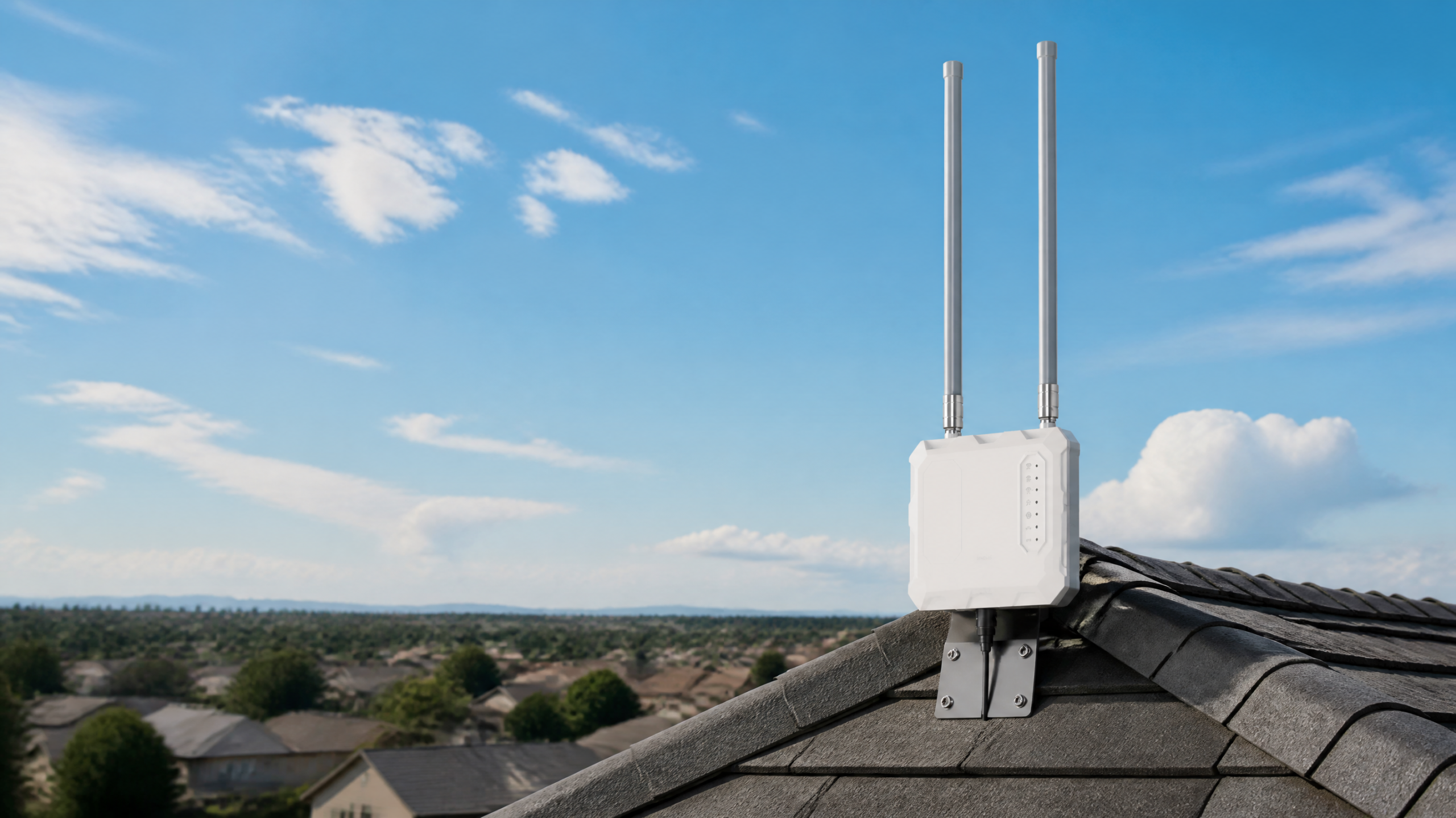
Traditional Wi-Fi (2.4GHz and 5GHz) is excellent for indoor use and relatively short outdoor distances. However, for expansive properties, farms, construction sites, or remote locations, its range often falls short. This is where cutting-edge technologies like Wi-Fi HaLow (IEEE 802.11ah) are making a significant impact on camera detection distance 2026.
Wi-Fi HaLow operates in sub-1 GHz uncontested spectrum and offers several key advantages:
- Extended Range: It can transmit data over much longer distances than standard Wi-Fi – often up to a mile or more – with strong signal penetration through walls and obstacles. This is revolutionary for outdoor security camera placement.
- Lower Power Consumption: Ideal for battery-powered devices, allowing cameras to operate for extended periods without recharging.
- Large Device Capacity: Can support thousands of devices on a single access point, perfect for large-scale deployments.
For those needing robust long-range surveillance without the complexity and cost of wired installations or frequent battery changes, Wi-Fi HaLow cameras are becoming the preferred solution. They bridge the gap between short-range Wi-Fi and complex cellular or mesh networks.
Product Spotlight: ShowMo MileFlask – Unprecedented Range for Outdoor Security
When “how far can outdoor security camera see” becomes a critical concern for large properties, farms, construction sites, or even just expansive backyards, the average camera simply won’t cut it. This is precisely where the ShowMo MileFlask enters the scene, redefining expectations for outdoor security camera range.
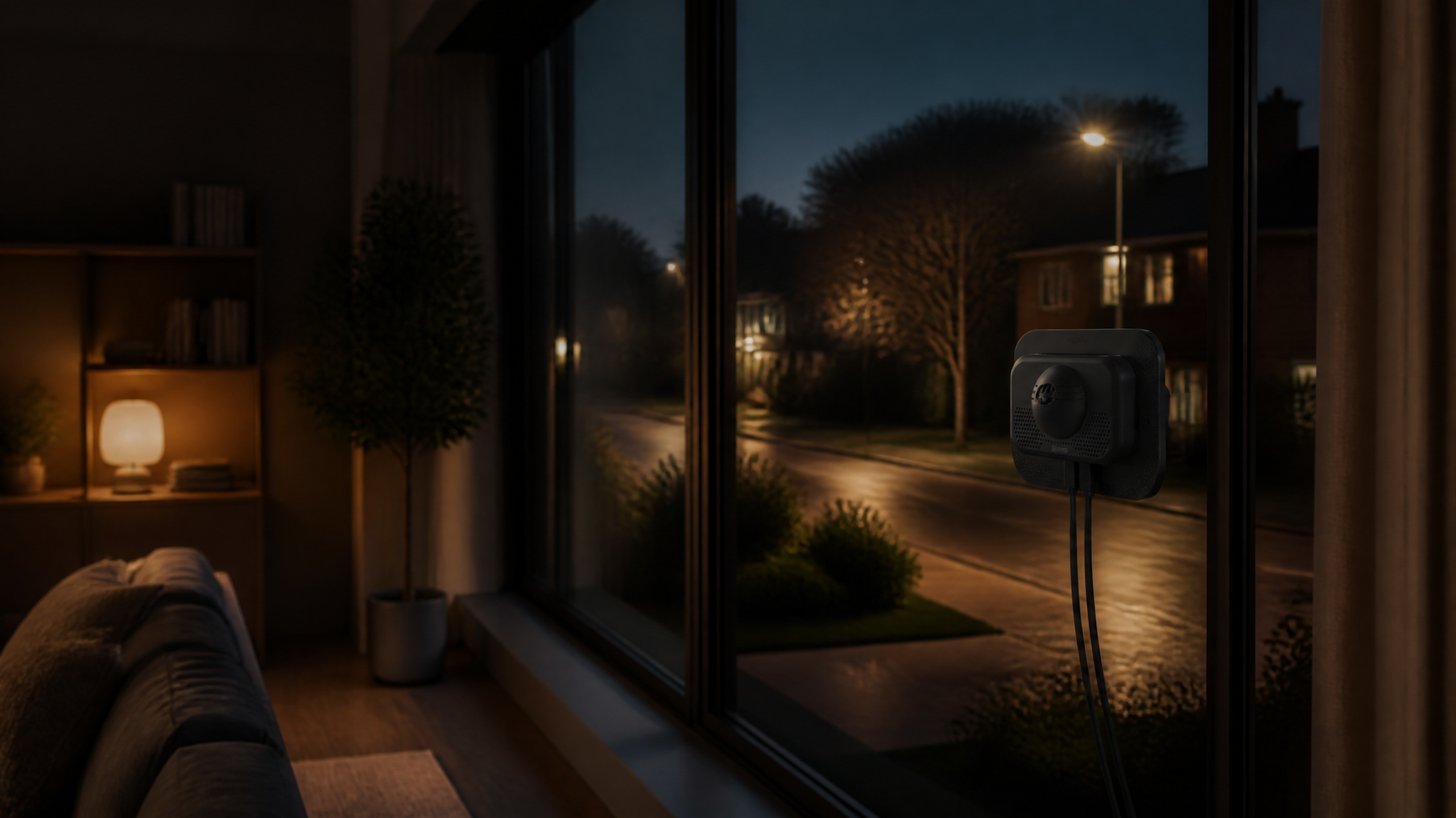
The ShowMo MileFlask is a game-changer because it leverages advanced Wi-Fi HaLow technology. While most wireless cameras struggle to maintain a stable connection beyond 150-300 feet, the MileFlask boasts an incredible 1-mile wireless range. This means you can monitor distant gates, barns, remote corners of your acreage, or perimeter fences without running extensive cables or relying on expensive cellular plans.
Beyond its unparalleled wireless reach, the ShowMo MileFlask offers:
- No Monthly Fees: Enjoy continuous surveillance without ongoing subscription costs, a significant long-term saving.
- High-Quality Video: Capture clear footage necessary for detection and identification, even across vast distances.
- Battery-Powered & Solar Compatible: Its low power consumption, typical for HaLow devices, allows for battery and solar panel integration, making it truly wireless and self-sufficient in remote locations.
- Robust Outdoor Design: Built to withstand harsh weather conditions, ensuring reliable operation year-round.
If you’re seeking a solution that truly breaks free from the limitations of traditional wireless cameras, providing extensive coverage and reliable connectivity over vast outdoor areas, the ShowMo MileFlask is an essential consideration for 2026 and beyond.
Maximizing Your Camera’s Effective Range
Regardless of the camera you choose, there are strategies you can employ to get the most out of its range:
- Strategic Placement: Mount cameras at optimal heights (8-10 feet is common) to get a clear, unobstructed view. Avoid aiming directly into strong sunlight or areas with constant glare.
- Clear Line of Sight: Minimize obstacles like trees, bushes, or structures that can block both the camera’s visual range and its wireless signal.
- Supplemental Lighting: For areas beyond your camera’s IR night vision, consider adding motion-activated floodlights. Color night vision often requires ambient light.
- High-Resolution Cameras (1440p, 4K): Invest in higher resolution if identification at a distance is crucial. Remember, you can always digitally zoom into higher resolution footage with less quality loss.
- Optical Zoom Lenses: For specific focal points or the ability to adjust coverage, optical zoom is vastly superior to digital zoom for maintaining image quality over distance.
- Wi-Fi Extenders/Mesh Networks: For standard Wi-Fi cameras, these can boost signal strength and coverage at a greater distance from your main router. For truly long distances, Wi-Fi HaLow is superior.
FAQ: How Far Outdoor Security Cameras See
Q1: What’s the real difference between detection distance and identification distance?
A1: Detection distance is the maximum range at which your camera can simply tell if something (like a person or vehicle) is present and moving. Identification distance is much shorter and refers to the range at which you can clearly make out specific details, such as a person’s face or a vehicle’s license plate, which is crucial for evidence.
Q2: Can I extend the night vision range of my outdoor security camera?
A2: Yes, you can. The most effective way is to add external IR illuminators or motion-activated floodlights. External IR lights can significantly boost the camera’s ability to “see” in the dark beyond its built-in IR range, while floodlights can enable color night vision on compatible cameras by providing enough ambient light.
Q3: What role does wireless technology play in how far my security camera can be placed?
A3: Wireless technology is critical for camera placement. Standard Wi-Fi (2.4GHz/5GHz) has a limited range, typically 50-150 feet outdoors, before signal degradation occurs. Newer technologies like Wi-Fi HaLow, as seen in the ShowMo MileFlask, operate on different frequencies that allow for significantly longer transmission distances, often up to a mile, enabling surveillance of much larger properties without complex wiring.
Conclusion: Choosing the Right Range for Your Security Needs
The question of “how far outdoor security camera see” is multifaceted, depending on a combination of technology, environment, and your specific security goals. For standard residential properties, a high-resolution camera (1080p to 4K) with a good optical zoom, placed strategically, will often suffice within 50-100 feet.
However, for large estates, agricultural operations, commercial perimeters, or remote monitoring, traditional solutions fall short. This is where advanced technologies, like the Wi-Fi HaLow employed by the ShowMo MileFlask, become indispensable. Offering an unprecedented 1-mile wireless range and no monthly fees, it provides a powerful, flexible, and cost-effective solution for securing vast outdoor areas.
By understanding the nuances of lens types, resolution, night vision, and wireless protocols, you can make an informed decision to ensure your outdoor security cameras provide the coverage and clarity you need to keep your property safe and sound in 2026 and beyond.