

How to Secure a Property With No Power Outlets at the Camera Location
Securing a property can be a complex endeavor, especially when you encounter obstacles like a lack of readily available power outlets for your security cameras. Whether you’re monitoring a remote cabin, a sprawling farm, an empty lot, or simply a far corner of your backyard, the absence of an AC power source at the ideal camera placement can feel like a major roadblock. Traditional wired security systems require power to operate, leaving many property owners wondering how to achieve robust surveillance without the hassle and expense of running new electrical lines.
Good news: you don’t have to compromise on security! Thanks to advancements in home security technology, there are several innovative solutions designed specifically for situations where power outlets are out of reach. This comprehensive guide will explore the best strategies and technologies to help you deploy effective security camera systems, even in the most challenging environments. We’ll delve into the world of battery-powered cameras, solar options, and cutting-edge wireless technologies that make securing virtually any spot possible.
The Challenges of Powering Cameras Remotely
Before diving into solutions, it’s important to understand the core challenges that arise when installing security camera with no power outlet. These include:
- Infrastructure limitations: Running electrical conduit and wiring can be costly, time-consuming, and require professional installation, especially over long distances or through difficult terrain.
- Aesthetics: Visible wires can be unsightly and detract from a property’s appearance.
- Safety concerns: Improper wiring can pose electrical hazards and may not comply with local building codes.
- Environmental factors: Wires exposed to the elements are susceptible to damage from weather, pests, or even vandalism.
- Temporary or mobile needs: For construction sites, events, or rental properties, permanent wiring isn’t a practical solution.
Overcoming these hurdles requires a shift from traditional wired approaches to more flexible and self-sustaining technologies. Let’s explore the leading options.
Top Solutions for “Security Camera No Power Outlet” Scenarios
1. Battery-Powered Security Cameras
When you hear “wireless camera no wiring,” battery-powered security cameras are often the first solution that comes to mind, and for good reason. These devices offer unparalleled flexibility in placement.
- How they work: These cameras are equipped with rechargeable batteries that power their operation. Modern battery cameras are highly efficient, often featuring low-power modes and motion-activated recording to conserve battery life.
- Advantages:
- Ultimate flexibility: Place them virtually anywhere, as long as they are within Wi-Fi range (or have cellular connectivity).
- Easy installation: No wires to run, making DIY installation straightforward.
- Portability: Can be easily moved and reinstalled as surveillance needs change.
- Disadvantages:
- Battery life: Requires periodic recharging or battery replacement. Battery life varies significantly based on usage (recording frequency, live view access, motion detection events, etc.).
- Limited recording: To conserve power, many battery cameras only record when motion is detected, potentially missing continuous footage.
- Wi-Fi range: Still dependent on a strong Wi-Fi signal from your router, which can be an issue in remote locations.
- Best for: Entrances, small backyards, temporary monitoring, or areas with infrequent activity where running wires is impossible.
2. Solar-Powered Security Cameras
Pairing a battery security camera with solar panels is a game-changer for long-term, self-sufficient surveillance in remote areas. This combination addresses the primary drawback of battery cameras: the need for manual recharging.
- How they work: A small solar panel continuously charges the camera’s internal battery during daylight hours. This allows the camera to operate 24/7 without needing to be unplugged for recharging, as long as there’s adequate sunlight.
- Advantages:
- Sustainable operation: Virtually eliminates the need for manual battery changes or recharging.
- Eco-friendly: Utilizes renewable energy.
- Ideal for remote locations: Perfect for monitoring properties far from any power grid.
- Disadvantages:
- Reliance on sunlight: Performance can be affected by prolonged cloudy weather, heavy shade, or short winter days.
- Initial cost: Often slightly more expensive than standalone battery cameras due to the added solar panel.
- Panel placement: Requires careful positioning of the solar panel to maximize sun exposure.
- Best for: Farms, large agricultural properties, construction sites, cabins, or any outdoor area with good sun exposure that needs continuous monitoring without external power. This is an excellent solution for battery security camera outdoor placements.
3. Cellular Security Cameras
When both power outlets and Wi-Fi networks are absent, cellular security cameras provide a reliable solution. These cameras operate much like your smartphone, using a 4G LTE or 5G cellular network to transmit data.
- How they work: Equipped with a SIM card, these cameras connect directly to a cellular network. They often also include internal batteries and can be paired with solar panels for continuous operation.
- Advantages:
- True independence: No Wi-Fi or wired power required, making them ideal for truly off-grid locations.
- Wide coverage: Operates wherever there is cellular signal.
- Disadvantages:
- Monthly data plan: Requires a recurring subscription fee for data usage, which can add up.
- Data consumption: High-resolution video and frequent recording can quickly consume data allowances.
- Signal strength: Performance depends on the availability and strength of cellular signal at the location.
- Best for: Vacant land, construction sites, remote hunting cabins, boats, or properties with absolutely no internet infrastructure.
4. Wi-Fi HaLow (802.11ah) Cameras
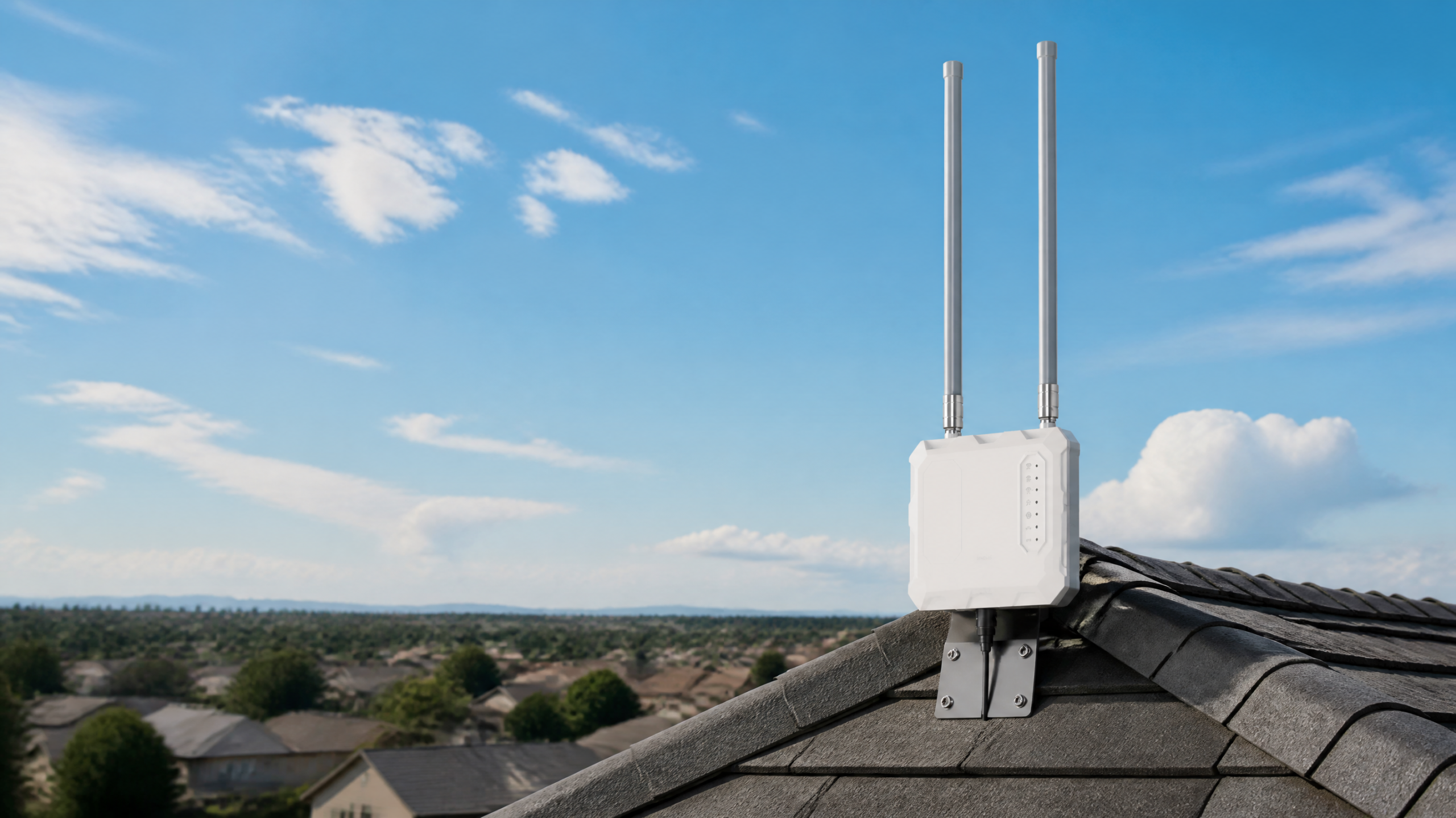
For scenarios where you have power (or solar power) but your Wi-Fi signal doesn’t reach your desired camera location, Wi-Fi HaLow technology offers a revolutionary solution. This emerging standard operates in the sub-1 GHz frequency band, allowing for significantly extended range and improved penetration through obstacles compared to traditional 2.4 GHz and 5 GHz Wi-Fi.
- How they work: Wi-Fi HaLow cameras connect to a compatible HaLow-enabled hub or router. They consume less power than conventional Wi-Fi cameras while maintaining strong, long-distance connections.
- Advantages:
- Long-range connectivity: Can extend Wi-Fi coverage up to a mile or more in ideal conditions, far beyond standard Wi-Fi.
- Better penetration: More effectively passes through walls, buildings, and foliage.
- Low power consumption: Ideal for battery-powered or solar-powered applications, as a strong signal reduces the camera’s effort to transmit data.
- No monthly fees: Unlike cellular cameras, you only need to purchase the equipment.
- Disadvantages:
- Newer technology: Fewer commercially available options compared to traditional Wi-Fi.
- Requires HaLow hub/router: You need a compatible hub or router on your property for the cameras to connect to.
- Best for: Large properties, farms, schools, or industrial sites where a central network exists but needs to reach distant outbuildings or perimeter areas without running ethernet cables.
Comparison Table: Remote Camera Solutions
To help you decide, here’s a quick comparison of the camera types for scenarios where you need security camera no power outlet:
| Feature | Battery-Powered Cam | Solar-Powered Cam | Cellular Cam | Wi-Fi HaLow Cam |
|---|---|---|---|---|
| Power Source | Rechargeable battery | Battery + Solar Panel | Battery + SIM (often solar compatible) | Battery/AC (connects to HaLow hub) |
| Internet Connectivity | Standard Wi-Fi | Standard Wi-Fi | 4G/5G Cellular Network | Wi-Fi HaLow (sub-GHz) |
| Wireless Range (Internet) | Short/Medium (up to 300 ft) | Short/Medium (up to 300 ft) | Wherever cellular signal available | Long (up to 1 mile+) |
| Ease of Installation | Very Easy | Easy (requires panel positioning) | Very Easy | Easy (requires HaLow hub) |
| Operating Cost | Low (electricity for charging) | Very Low (minimal electricity) | High (monthly data plan) | Low (electricity for charging) |
| Best Use Case | Small areas, temporary monitoring | Outdoor areas with sunlight, continuous monitoring | Off-grid, no Wi-Fi/power | Large properties, long-range Wi-Fi needed |
Product Spotlight: ShowMo MileFlask
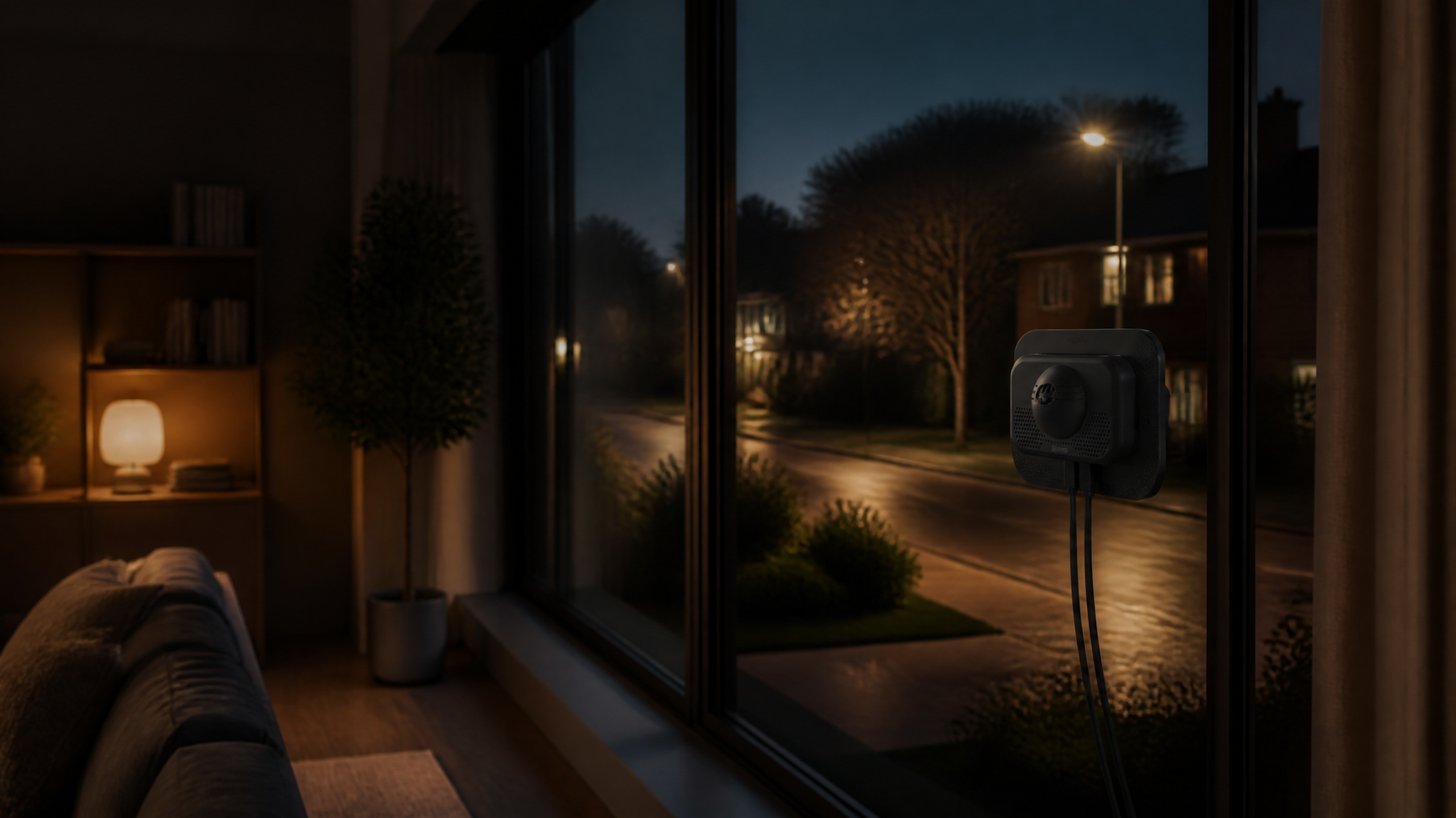
When it comes to long-range, truly wireless camera no wiring solutions for expansive properties, the ShowMo MileFlask stands out. This innovative outdoor security camera utilizes cutting-edge Wi-Fi HaLow technology (802.11ah) to deliver an impressive 1-mile wireless range, making it perfectly suited for challenging remote surveillance scenarios.
The MileFlask isn’t just about range; it’s designed for practical, real-world deployment where power outlets are nonexistent. It operates on a robust internal battery that can be effortlessly paired with an optional solar panel. This combination means you get truly continuous, self-sustaining operation without the need for manual recharging or cumbersome wiring. Imagine securing a distant gate, a remote pasture, or the far end of a warehouse lot, all connected to your central network without digging trenches or hiring electricians.
Key features that make the ShowMo MileFlask an excellent choice for “security camera no power outlet” situations:
- 1-Mile Wireless HaLow Range: Eliminates Wi-Fi dead zones on large properties.
- Battery & Solar Powered: Provides continuous, off-grid operation.
- No Monthly Fees: Once purchased, there are no recurring data plan costs (unlike cellular cameras).
- 2K Super HD Clarity: Capture detailed footage day and night.
- Smart AI Detection: Reduces false alarms by accurately identifying people and vehicles.
- Two-Way Audio: Communicate with visitors or deter intruders from afar.
- Durable Outdoor Design: IP66 weatherproof rating ensures resilience in harsh conditions.
The ShowMo MileFlask is an ideal solution for anyone needing to secure vast outdoor spaces, construction sites, farms, industrial premises, or even just a backyard shed that’s beyond the reach of standard Wi-Fi. It bridges the gap between traditional wired systems and short-range wireless cameras, offering a powerful and cost-effective way to achieve comprehensive monitoring without electrical infrastructure.
Installation Tips for Remote Cameras
No matter which solution you choose, a few general tips can help ensure successful deployment:
- Assess connectivity: Before purchasing, verify if you have sufficient Wi-Fi, cellular, or HaLow signal strength at your desired camera location.
- Optimize solar panel placement: If using solar, ensure the panel is angled correctly and free from obstructions to maximize sun exposure throughout the day.
- Consider line of sight: For Wi-Fi HaLow and even some standard Wi-Fi setups, maintaining a clear line of sight between the camera and its hub/router will significantly improve signal strength and range.
- Test before final mounting: Temporarily mount and test your camera’s functionality, signal strength, and battery performance before permanent installation.
- Regular maintenance: Keep solar panels clean and perform regular battery health checks to ensure optimal performance.
FAQ: Securing Properties Without Power Outlets
Q1: How long do battery security cameras usually last on a single charge?
A1: Battery life for battery security camera outdoor models varies widely depending on several factors: the camera’s battery capacity, the frequency of motion detection events, the number of live views, resolution settings, and environmental temperature. Some cameras may last a few weeks with heavy use, while others boast several months of life with optimized settings and less activity. Pairing with a solar panel is the best way to ensure virtually endless battery life without manual intervention.
Q2: Can I use a Wi-Fi extender to boost the signal for a remote camera?
A2: Yes, a standard Wi-Fi extender can help extend your existing Wi-Fi network’s range. However, traditional Wi-Fi extenders typically only get you so far, often struggling with significant distances or through thick walls. For truly long distances (over a few hundred feet) or challenging environments, dedicated long-range solutions like Wi-Fi HaLow (e.g., ShowMo MileFlask) or powerline adapters (if a power connection exists closer to the camera) are more effective. Cellular cameras bypass the need for Wi-Fi entirely.
Q3: Are “wireless camera no wiring” solutions really as reliable as wired systems?
A3: Modern wireless camera no wiring solutions have become remarkably reliable, often offering features comparable to wired systems. Key differences lie in power management (battery life), signal stability (Wi-Fi, cellular, or HaLow strength), and potential for recording gaps (many battery cameras only record on motion). For critical applications requiring 24/7 continuous recording and maximum uptime, wired and professionally installed systems still offer the highest level of reliability. However, for flexibility and ease of deployment where wired isn’t an option, the advanced wireless and battery/solar solutions provide excellent and often sufficient security.
Conclusion
The days of being limited by power outlets for your security cameras are over. With the rapid evolution of technology, property owners now have a multitude of powerful and flexible options to secure even the most remote corners of their land. From self-sustaining solar-powered systems to cellular cameras that operate entirely off-grid, and revolutionary long-range Wi-Fi HaLow cameras like the ShowMo MileFlask, achieving comprehensive surveillance without a convenient power source is not just possible, but practical.
By carefully evaluating your property’s specific needs—including distance from power, Wi-Fi availability, sunlight exposure, and budget—you can select the ideal “security camera no power outlet” solution. Embrace these innovations to extend your peace of mind to every inch of your property, no matter how remote.