

You’re looking for a simple, effective way to boost your home security, and a brilliant idea springs to mind: use an indoor security camera to monitor the outdoors, right through your window. It sounds genius – no drilling, no weather worries, just discreet surveillance from the comfort of your home. But as with many seemingly perfect solutions, a nagging question remains: does a security camera through glass actually work?
The short answer is: sometimes, but with significant caveats. While it’s tempting to think your indoor camera can simply peer through the pane and capture crystal-clear footage of your yard, several technical hurdles often turn this DIY dream into a blurry nightmare. In this comprehensive guide, we’ll delve into the science behind why security cameras struggle with glass, explore common problems like reflection and night vision issues, and introduce a revolutionary solution designed specifically for this challenge.
The Physics of Glass: Why It’s a Camera’s Foe
At first glance, a window seems perfectly transparent. We see through it clearly, so why can’t a camera? The answer lies in the way glass interacts with light, especially the light wavelengths used by most security cameras.
Reflections, Refractions, and Glare
One of the biggest problems is simple physics: reflection. When light hits glass, a portion of it is always reflected back. For a camera placed indoors looking out, this means:
- Internal Reflections: Any light source inside your home (lamps, TV screens, even ambient room light) can bounce off the inner surface of the window glass and directly into the camera’s lens. This appears as glare, bright spots, or hazy areas that obscure the outdoor view.
- External Reflections: While less common for the camera’s image, external light sources can also reflect off the outer surface, causing distortions or overexposure in certain areas.
- Double Panes: Modern double or triple-pane windows, designed for insulation, intensify these reflection issues. Each layer of glass adds another surface for light to bounce off, creating even more glare and sometimes a “ghosting” effect.
The angle at which the camera is positioned relative to the window and ambient light sources plays a huge role in minimizing or maximizing these reflections. However, completely eliminating them with a standard camera is nearly impossible.
The Night Vision Dilemma: IR Light and Glass
This is where things get truly complicated for anyone hoping to use a standard security camera through glass at night. Most security cameras utilize Infrared (IR) LEDs for night vision. These LEDs emit invisible light (to the human eye) that illuminates the scene, allowing the camera’s sensor to “see” in the dark.
Here’s the critical failing point:
- IR Reflection Off Glass: When a camera’s built-in IR illuminators hit the window glass, virtually all of that IR light is immediately reflected back into the lens. This creates an intense, blinding glare for the camera, making the outdoor scene completely washed out and unviewable. It’s like shining a flashlight directly into your eyes in a dark room.
- Invisible Barriers: Even if you managed to somehow prevent direct IR reflection, the glass itself can absorb and scatter some IR wavelengths, further degrading the image quality.
This is why, for effective window camera night vision, a camera must either completely disable its IR lights or use an alternative method of illumination.
The Role of the IR Cut Filter Security Camera
Most cameras have an IR cut filter security camera feature. During the day, an IR cut filter blocks infrared light from reaching the sensor, ensuring colors appear natural. At night, this filter is removed (or “cut”) to allow IR light in, enabling night vision.
However, for a camera looking through glass, this filter’s operation becomes problematic. Even if the camera could somehow emit IR light outwards without reflection (which it can’t), the filter’s normal function is designed for direct viewing, not through an additional reflective barrier.
Common Problems When Using a Standard Camera Through Glass
Let’s summarize the frustrating issues you’ll likely encounter if you try to repurpose a standard indoor security camera for outdoor surveillance through a window:
- Blinding Glare (Day and Night): Daytime reflections from internal lights, and nighttime reflections from the camera’s own IR LEDs, will severely obstruct the view.
- Washed-Out Night Vision: The camera’s built-in IR lights will be useless, making the outdoor scene look like a bright, foggy mess.
- Blurred and Distorted Images: Reflections can cause the image to appear soft, blurry, or even have double images.
- Reduced Field of View: The angles of reflection might constrain the actual area the camera can effectively monitor.
- Motion Detection Failures: Glare and reflections can trigger false alarms or, worse, prevent actual motion from being detected.
- Focus Issues: Cameras designed for indoor distances might struggle to focus clearly on outdoor objects through glass, especially with varying light conditions.
Here’s a quick comparison of a standard camera vs. a specialized window camera:
| Feature/Scenario | Standard Security Camera Through Glass | ShowMo WinEye (Window-Mounted) |
|---|---|---|
| Daytime Glare | High; due to internal reflections off glass. | Minimized; specialized design reduces internal reflections. |
| Night Vision Reliability | Poor; IR LEDs reflect off glass, blinding the camera. Outdoor scene is washed out. | Excellent; utilizes a ‘black light’ 940nm IR (invisible & non-reflective) or Starlight sensor for true 4K night vision. |
| Installation Effiency | Indoor placement, but still requires careful positioning to reduce glare. | No-drill; mounts directly to the window, saving time and hassle. |
| Focus Capability | Can struggle with focus through multiple planes of glass. | Optimized for clear focus through glass onto outdoor scenes. |
| Motion Detection | Prone to false alarms or missed events due to reflections and poor image quality. | More accurate; clearer image leads to reliable outdoor detection. |
| Aesthetics | Can look bulky or out of place on a windowsill. | Sleek, compact, designed to blend with window frames. |
The Solution: Cameras Designed for Through-Glass Monitoring
Given the challenges, it’s clear that a standard camera simply isn’t up to the task of reliable through-glass surveillance. What’s needed is a camera specifically engineered to overcome these obstacles.
Such cameras typically incorporate several key features:
- No Built-in Visible IR LEDs: The absolute most crucial feature. These cameras either forgo IR altogether or use specialized, non-reflective IR.
- External or Covered IR Illumination: For night vision, they often rely on external IR illuminators placed outside the window, or they use 940nm “black light” IR LEDs that are less prone to reflection and invisible to the human eye.
- Advanced Sensors: Low-light or ‘Starlight’ sensors that can capture clear images in minimal ambient light without needing additional illumination.
- Anti-Glare Technology: Specific lens coatings, housing designs, or software algorithms to minimize internal reflections.
- Optimized Mounting: Designed to mount flush against the window glass to reduce the gap where light can reflect.
Product Spotlight: ShowMo WinEye – The Ultimate Window-Mounted Security Camera
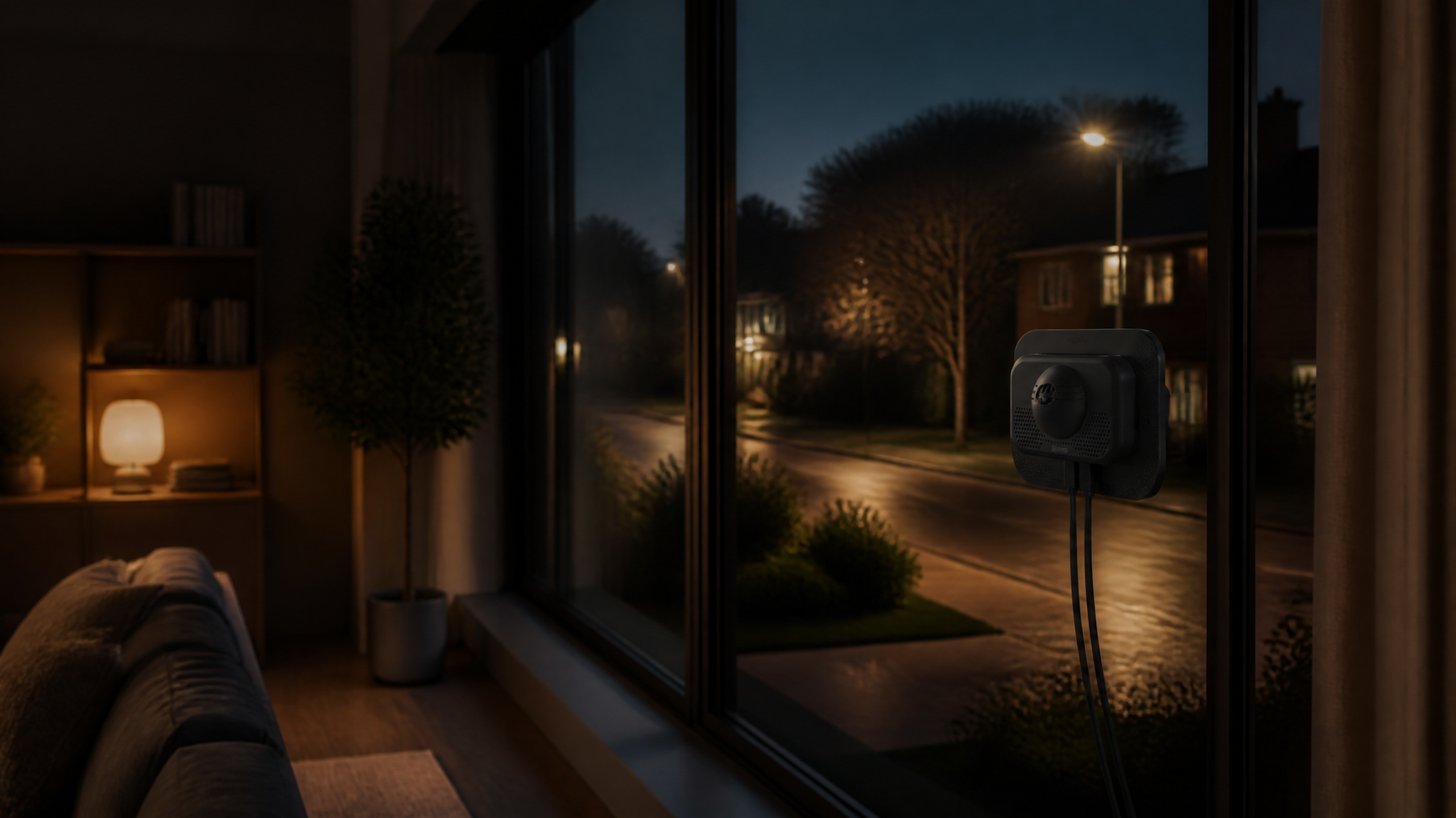
If you’re serious about convenient, effective outdoor surveillance without drilling or wiring, the ShowMo WinEye is precisely what you need. It’s a revolutionary indoor camera specifically designed for outdoor monitoring through glass, tackling all the common problems head-on.
The ShowMo WinEye isn’t just another indoor camera; it’s a purpose-built system that understands the physics of glass. Here’s how it works its magic:
- No-Drill, Effortless Installation: Forget about power tools and complex wiring. The WinEye mounts securely and discreetly to any window pane in minutes, allowing you to monitor your porch, driveway, backyard, or street with ease.
- True 4K “Black Light” Night Vision: This is where the WinEye truly shines. Unlike conventional cameras, it utilizes advanced 940nm invisible IR LEDs with a specialized light path. These “black light” IRs are not visible to the human eye and, crucially, are designed to pass through glass with minimal reflection, providing unparalleled 4K crystal-clear nighttime footage of your exterior. It completely bypasses the traditional IR cut filter security camera reflection issues.
- Glare and Reflection-Resistant Design: Engineered with optical precision, the WinEye’s design minimizes internal reflections and glare, ensuring clear, unobstructed views even during the day from inside your home.
- Advanced AI Detection: Beyond just motion, the WinEye offers intelligent human and vehicle detection, reducing false alarms and ensuring you’re only notified about what truly matters.
- Weatherproof from Indoors: Because it’s mounted indoors, your camera is protected from harsh weather conditions, extending its lifespan and maintaining optimal performance without outdoor maintenance.
- Two-Way Audio: Communicate with visitors or deter intruders directly through the camera’s integrated speaker and microphone.
The ShowMo WinEye dramatically alters the answer to “security camera through glass: does it actually work?” By addressing every technical challenge, it transforms a problematic concept into a reliable, high-performance security solution.
FAQs About Security Cameras Through Glass
Q1: Can I just turn off the IR lights on my standard indoor camera for night vision through glass?
A1: Yes, you can often turn off the IR lights in your camera’s settings. However, doing so will leave you with no night vision at all. Your camera will only be able to capture footage if there’s significant ambient light outside (e.g., a bright street light, full moon). The image quality will likely be very poor and grainy. External IR illuminators or a camera with specialized low-light sensors (like the ShowMo WinEye’s 4K “black light” feature) are required for effective window camera night vision without reflective glare.
Q2: How can I minimize reflections during the day when using a standard camera through a window?
A2: To minimize daytime reflections, try to position the camera as close to the glass as possible, ideally flush against it, to reduce the gap where light can reflect. Ensure no internal lights are shining directly onto the glass near the camera. You can also try using a dark cloth or covering around the camera’s lens against the glass to block internal light. However, these are often partial solutions, and some reflections may still occur, especially with double-pane windows.
Q3: What’s the main difference between a standard indoor camera and one designed for through-glass viewing like the ShowMo WinEye?
A3: The key difference lies in their night vision capabilities and design for overcoming reflections. A standard indoor camera uses visible IR LEDs that will reflect off glass, blinding the camera at night. Its lens system isn’t optimized for viewing through multiple layers of glass, leading to glare and focus issues. A camera like the ShowMo WinEye uses specialized, non-reflective “black light” 940nm IR for clear night vision through glass, or advanced Starlight sensors, and is optically engineered to minimize glare and ensure optimal focus through windows, providing a genuinely reliable solution for exterior monitoring from inside.
Conclusion
The idea of using a security camera through glass for outdoor surveillance is appealing due to its simplicity and discretion. However, as we’ve explored, standard security cameras are simply not equipped to handle the unique challenges presented by glass, especially when it comes to reliable night vision and avoiding frustrating reflections. The physics of light and the design of conventional IR illuminators create an almost insurmountable barrier.
For those seeking a truly effective and hassle-free solution, purpose-built devices like the ShowMo WinEye are essential. By ingeniously sidestepping the pitfalls of traditional IR and engineering for optimal clarity through glass, these specialized cameras finally make the dream of no-drill, window-mounted outdoor security a reality. So, while a standard camera through glass might offer a glimpse, a specialized solution will provide the clear, consistent, and dependable surveillance you need for true peace of mind.