
How Far Can Outdoor Security Cameras See? Range Guide 2026
In 2026, securing your home or property goes beyond just having a camera; it’s about understanding its capabilities, especially its visual range. The question of “how far outdoor security cameras see” is crucial for effective surveillance, preventing blind spots, and ultimately, deterring potential threats. With technology evolving at a rapid pace, knowing what to expect from modern security camera range outdoor setups can make all the difference in your security strategy.
This comprehensive guide will delve into the factors influencing a security camera’s reach, discuss different types of range, and help you determine the optimal camera detection distance 2026 for your specific needs. We’ll also spotlight innovative solutions that push the boundaries of traditional surveillance.
Understanding Surveillance Range: What Factors Matter?
The advertised range of a security camera can often be misleading. It’s not a single, static number but rather a combination of various technological and environmental factors. Here’s what truly impacts how far your outdoor security camera can see:
1. Lens Type and Focal Length
- Fixed Lenses: These offer a consistent field of view (FOV). A wider angle (shorter focal length, e.g., 2.8mm) covers a larger area but makes distant objects appear smaller and less detailed. A narrower angle (longer focal length, e.g., 12mm) provides more detail for objects further away but with a smaller FOV.
- Varifocal Lenses: These allow manual adjustment of the focal length, acting like a manual zoom. This is ideal for customizing the balance between FOV and detail based on your installation.
- Motorized/PTZ Lenses: Pan-Tilt-Zoom (PTZ) cameras offer the ultimate flexibility, allowing you to remotely adjust the view, zoom in on suspicious activity, and even track subjects. The optical zoom capability significantly extends the detail range.
2. Resolution
Pixel count is king when it comes to identifying details at a distance. Here’s a brief look at how different resolutions impact effective range:
- 1080p (2MP): Good for general monitoring, but identification at significant distances can be challenging. An effective identification range might be 10-20 feet.
- 4K (8MP): Offers significantly more detail, allowing for clear identification of faces and license plates at much greater distances, potentially 40-60 feet or more, depending on the lens.
- Emerging Resolutions: As we move beyond 2026, cameras with even higher resolutions (e.g., 12MP, 16MP) will further extend the practical identification range.
3. Night Vision Technology
Daytime range is different from nighttime range, often due to lighting conditions. Most outdoor cameras incorporate some form of night vision:
- Infrared (IR) LEDs: These emit invisible light that the camera’s sensor can detect, illuminating the scene in black and white. The number and power of IR LEDs determine the effective IR range, typically 30-100 feet for standard cameras.
- Full-Color Night Vision (Starlight/ColorVu): Cameras with larger apertures, advanced sensors, and sometimes supplementary white light LEDs can capture full-color images even in low-light conditions. This often results in a clearer and more detailed night vision experience, extending the effective identification range compared to traditional IR.
4. Digital vs. Optical Zoom
- Optical Zoom: This is achieved by physically adjusting the lens, similar to a telescope. It magnifies the image without losing quality, making it crucial for detail at long distances.
- Digital Zoom: This simply crops and enlarges a portion of the image. While convenient, it leads to pixelation and loss of detail, especially when zooming in significantly. For meaningful identification, optical zoom is always preferred.
5. Environmental Factors
Beyond the camera’s hardware, external elements play a considerable role:
- Obstructions: Trees, buildings, fences, and even heavy rain or fog can significantly reduce the effective range.
- Lighting: Poor lighting, especially at night, will diminish clarity and range unless compensated by strong night vision.
- Installation Height and Angle: A higher installation might offer a wider view but reduce detail for objects directly below. The angle affects how much of the scene is captured meaningfully.
Defining Range: Detection, Recognition, and Identification
When discussing “how far outdoor security camera see,” it’s crucial to differentiate between three key terms:
- Detection Range: The distance at which you can simply tell that something is there – a human shape, a vehicle, a large animal. You can see movement but little to no detail. This is often the furthest range advertised.
- Recognition Range: The distance at which you can recognize what is there – e.g., you can tell it’s a person, differentiate between a car and a truck, or recognize a familiar pet. Specific details like clothing color might be visible.
- Identification Range: The critical distance at which you can positively identify who or what is there. This means seeing facial features clearly enough to identify an individual, reading a license plate, or discerning distinct markings on an object. This is the most challenging and typically the shortest of the three ranges.
Most basic security cameras excel at detection, perform adequately at recognition, but struggle significantly with identification beyond a few dozen feet without optical zoom and high resolution.
Optimizing Your Security Camera Range Outdoor for 2026
To maximize your camera detection distance 2026, consider these strategies:
- Choose Higher Resolution: Always opt for at least 4MP (2K) for outdoor use; 8MP (4K) is highly recommended for critical areas.
- Prioritize Optical Zoom: If monitoring larger properties or specific choke points, an optical zoom lens (2x, 4x, 10x or more) is invaluable.
- Strategic Placement: Mount cameras at an optimal height and angle to minimize blind spots and maximize coverage. Consider multiple cameras for overlapping fields of view in complex areas.
- Enhance Night Vision: Look for cameras with powerful IR LEDs or, ideally, full-color night vision capabilities for clearer nocturnal surveillance. Supplementary external lighting can also dramatically improve night performance.
- Consider AI Analytics: Advanced cameras use AI for human/vehicle detection, reducing false alarms and ensuring you’re alerted to relevant activity, even at greater distances where human eyes might miss subtle movements.
Comparison Table: Typical Outdoor Security Camera Ranges (2026)
| Camera Type/Feature | Detection Range (approx.) | Recognition Range (approx.) | Identification Range (approx.) | Key Benefit for Range |
|---|---|---|---|---|
| 1080p (2MP) Fixed Lens | 50-70 ft | 20-30 ft | 10-15 ft | Budget-friendly basic coverage |
| 4K (8MP) Fixed Lens | 80-120 ft | 40-60 ft | 20-30 ft | Increased detail at moderate distances |
| 4K with 4x Optical Zoom | 150-250 ft+ | 80-150 ft+ | 40-70 ft+ | Versatility for zooming in on distant details |
| Infrared (IR) Night Vision | 30-100 ft (B&W) | 15-50 ft (B&W) | 5-20 ft (B&W) | Basic low-light visibility |
| Color Night Vision | 50-150 ft (Color) | 30-80 ft (Color) | 15-40 ft (Color) | Superior low-light detail & color retention |
*Ranges are estimates and can vary significantly based on specific models, environmental conditions, and lighting.
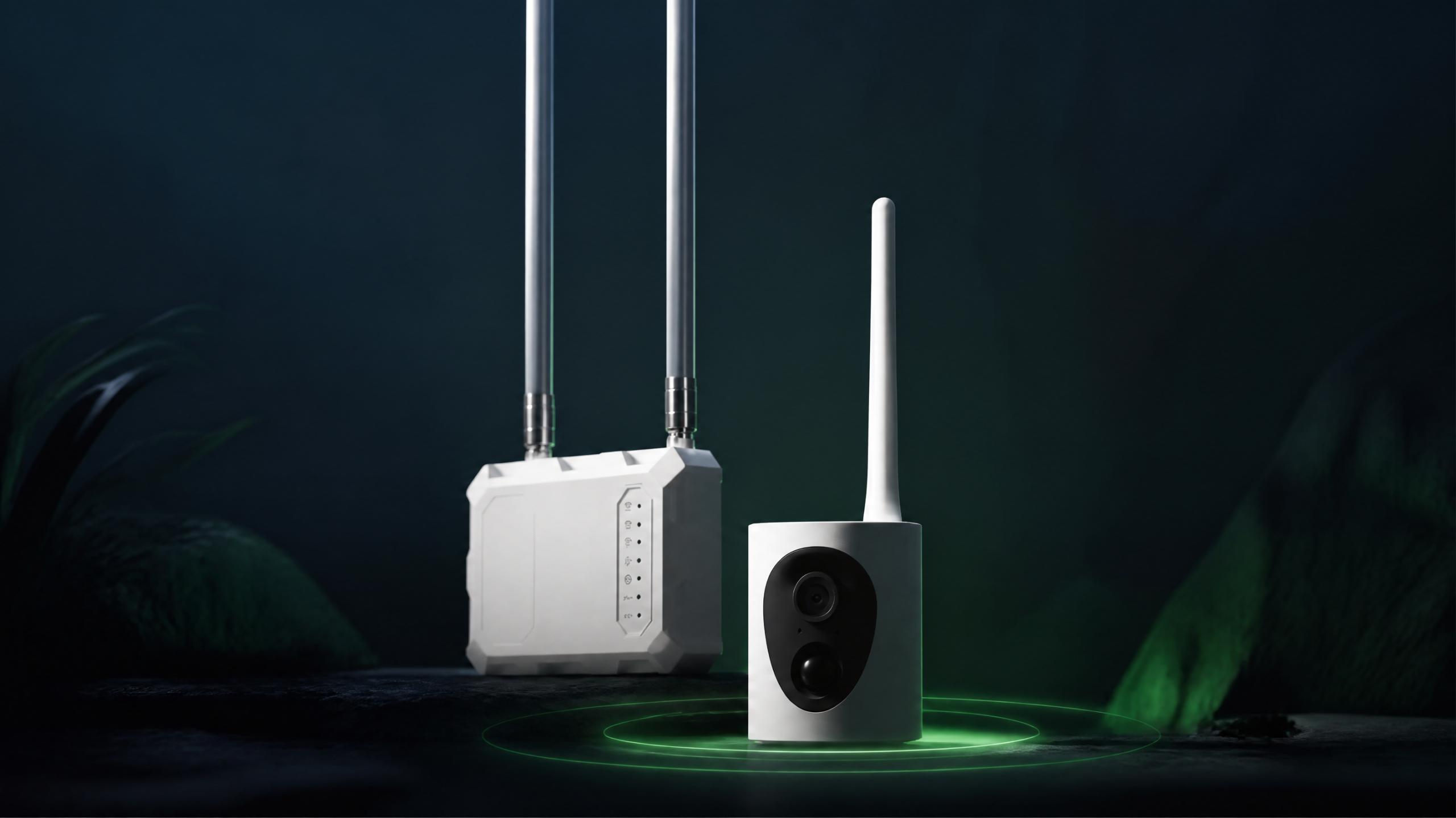
Product Spotlight: ShowMo MileFlask – Redefining Long-Range Security
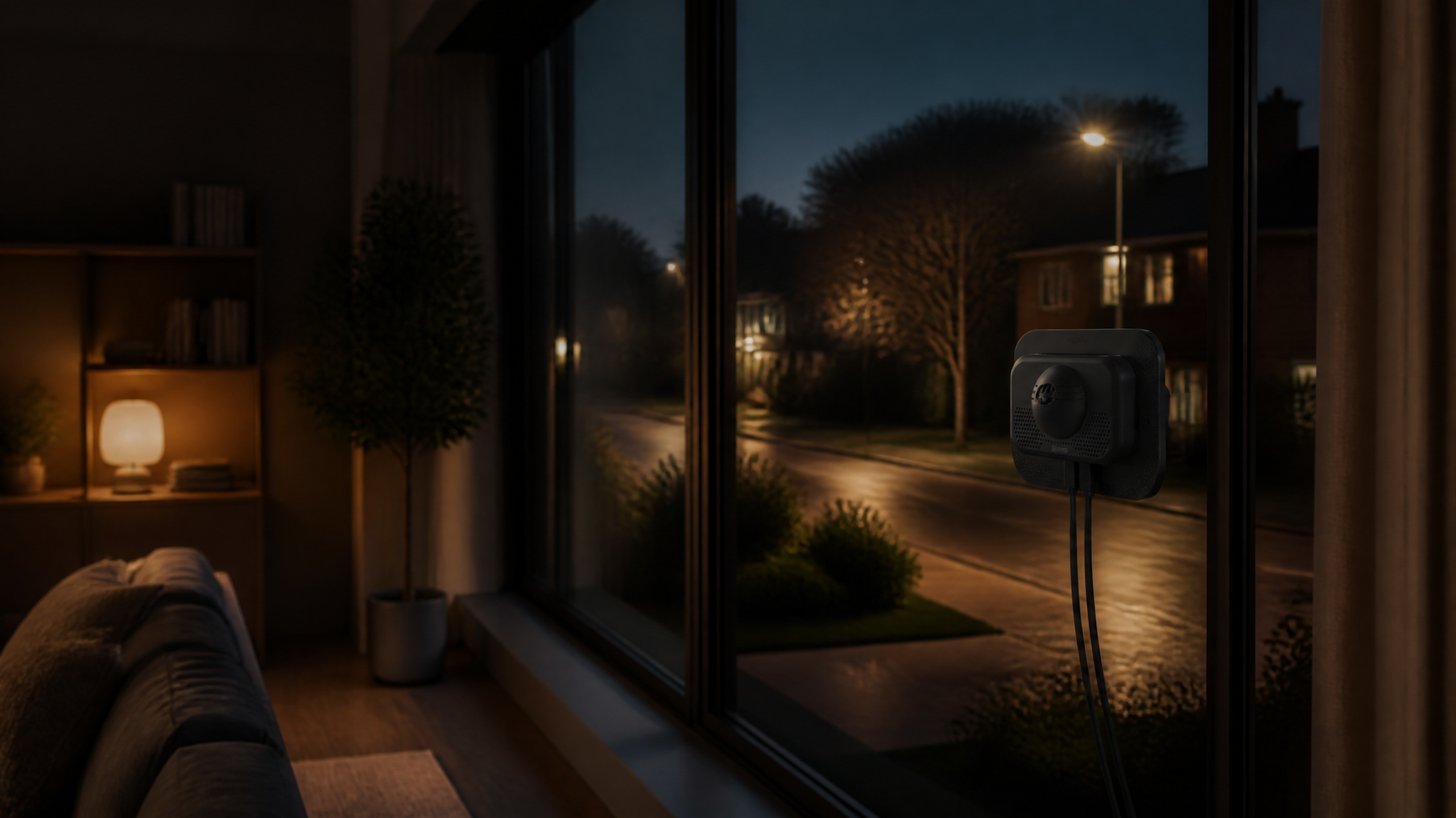
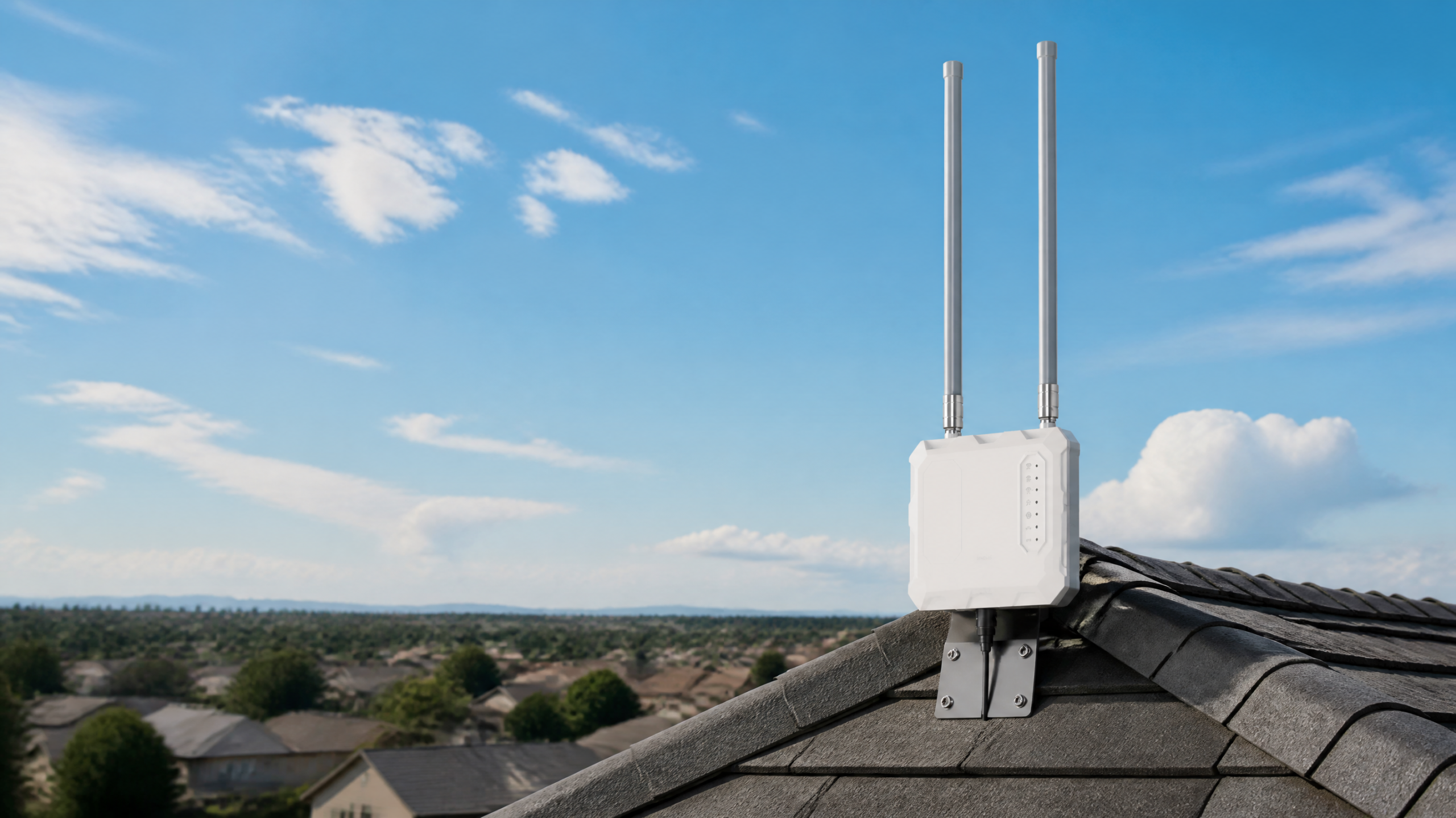
For those who require truly exceptional range without compromising on detail or incurring recurring costs, the ShowMo MileFlask stands out. This innovative Wi-Fi HaLow security camera redefines what’s possible in a security camera range outdoor setup. While most standard Wi-Fi cameras struggle beyond 150-200 feet in ideal conditions, the MileFlask boasts an incredible 1-mile wireless range.
This extended range is powered by advanced Wi-Fi HaLow (802.11ah) technology, which operates on sub-1 GHz bands, penetrating obstacles more effectively and consuming less power than traditional Wi-Fi. This means you can monitor remote areas of your property, barns, detached garages, or even distant gates without the need for complex wiring or signal repeaters.
Key features that make the ShowMo MileFlask a game-changer for camera detection distance 2026:
- 1-Mile Wireless Range: Unparalleled connectivity for expansive properties.
- No Monthly Fees: Enjoy local storage and full functionality without subscription costs.
- High-Definition Video: Clear footage for effective detection and identification.
- Robust Outdoor Design: Built to withstand harsh weather conditions.
- Easy Installation: Despite its advanced capabilities, it’s designed for straightforward setup.
The MileFlask is specifically engineered for users who have struggled with the limitations of conventional security cameras over large distances. Whether it’s a farm, a sprawling estate, a construction site, or a commercial property with remote facilities, the MileFlask provides reliable, long-range surveillance where traditional systems fall short.
Frequently Asked Questions About Security Camera Range
Q1: Does resolution actually impact how far a camera can “see”?
A: Yes, absolutely. While a camera can technically “see” a distant object (detection), higher resolution determines how much detail it can capture from that distance. A 4K camera will allow you to zoom in digitally on a distant object and still discern details that would be completely pixelated and unidentifiable with a 1080p camera.
Q2: Can night vision cameras see as far as daytime cameras?
A: Generally, no. Traditional infrared (IR) night vision provides a black-and-white image and often has a more limited effective range for identification compared to daytime. While the detection range might be similar, the clarity and detail required for recognition and identification are significantly reduced. Full-color night vision cameras, however, can bridge this gap considerably by capturing more data even in very low light.
Q3: What’s the biggest technological advancement for extending camera range in 2026?
A: For wireless range, the widespread adoption of technologies like Wi-Fi HaLow (as seen in the ShowMo MileFlask) offering sub-1 GHz connectivity has been a major breakthrough, pushing wireless transmission distances far beyond traditional Wi-Fi. For visual range, continuous improvements in sensor technology, lens optics (especially optical zoom), and sophisticated AI-driven image processing are allowing cameras to capture more detailed and identifiable footage at increasingly greater distances.
Conclusion
Determining “how far outdoor security cameras see” is a multifaceted challenge, but with the right knowledge and technology, you can achieve effective surveillance for any property size. From understanding the nuances of lens types and resolution to differentiating between detection, recognition, and identification ranges, making an informed decision is key.
As we navigate 2026, the capabilities of security camera range outdoor setups continue to impress. For those with particularly challenging long-range needs, innovative solutions like the ShowMo MileFlask leverage cutting-edge technology to provide unprecedented wireless reach and reliable security without the burden of monthly fees. By aligning your specific security requirements with the right camera features, you can ensure comprehensive and robust protection for your home or business.