

“`html
How Wi-Fi HaLow Works: The Sub-1 GHz Technology Explained for Smarter Security
In the evolving landscape of home security, connectivity is king. We rely on our cameras, sensors, and smart devices to keep us safe, but what happens when Wi-Fi struggles to reach those far-flung corners of our property? This is where an exciting new technology steps in: Wi-Fi HaLow. If you’ve been wondering how Wi-Fi HaLow works, you’re in the right place. This article will demystify this powerful sub-1 GHz Wi-Fi standard, explaining its benefits, especially for applications like long-range security cameras, and how it’s revolutionizing remote monitoring.
Traditional Wi-Fi, while excellent for high-bandwidth tasks like streaming movies from indoors, often falls short when it comes to covering large outdoor areas or penetrating multiple walls. This is precisely the gap that Wi-Fi HaLow, officially known as IEEE 802.11ah, was designed to fill. By operating on lower frequencies, it offers unparalleled range and penetration, making it an ideal candidate for robust, reliable home security solutions.
Understanding the Fundamentals: What is 802.11ah (Wi-Fi HaLow)?
At its core, Wi-Fi HaLow is a new Wi-Fi standard (IEEE 802.11ah) specifically engineered for the Internet of Things (IoT). Unlike the 2.4 GHz and 5 GHz bands used by conventional Wi-Fi, HaLow operates in the unlicensed sub-1 GHz frequency bands. This seemingly simple change has profound implications for wireless performance.
Why Sub-1 GHz Matters for Wireless Communication
- Extended Range: Lower frequencies inherently travel further than higher frequencies. Think of it like sound waves – deeper bass notes carry further than high-pitched chirps. This means a single Wi-Fi HaLow access point can cover a much larger area, potentially miles, compared to a standard Wi-Fi router.
- Improved Penetration: The sub-1 GHz spectrum also excels at passing through obstacles like walls, trees, and other structures. This is crucial for outdoor security cameras where line-of-sight might be obstructed or where you need connectivity to a shed at the back of your property.
- Lower Power Consumption: HaLow is designed for energy efficiency, allowing battery-powered devices to operate for extended periods. This is a significant advantage for devices like security cameras that can be deployed in remote locations without constant power access.
- High Capacity for IoT: While data rates are lower than traditional Wi-Fi, HaLow can support thousands of connected devices from a single access point, making it suitable for dense IoT deployments like smart homes or extensive sensor networks.
How Wi-Fi HaLow Works: The Technical Edge
Delving deeper into how Wi-Fi HaLow works reveals a clever combination of modulation techniques and protocol efficiencies that optimize it for long-range, low-power applications:
1. Frequency Bands: The Key to Range
As mentioned, HaLow utilizes license-exempt sub-1 GHz bands. The exact frequencies vary by region but typically fall between 750 MHz and 930 MHz. These lower frequencies suffer less from attenuation (signal loss) over distance and when encountering obstacles, directly contributing to its remarkable range and penetration capabilities.
2. Narrower Channels: Optimizing for Distance, Not Speed
Unlike conventional Wi-Fi which uses 20, 40, 80, or even 160 MHz wide channels for maximum speed, Wi-Fi HaLow often employs much narrower channels, down to 1 MHz. While this limits peak data rates, it significantly improves signal integrity and range by concentrating the signal’s energy into a smaller band. This is a trade-off that makes perfect sense for IoT devices that typically send small packets of data (e.g., motion alerts, sensor readings, or compressed video streams).
3. Enhanced Power Saving Features
802.11ah incorporates advanced power-saving mechanisms to maintain battery life for years in some cases. These include:
- Target Wake Time (TWT): Devices can schedule when they need to wake up to send or receive data, remaining in a deep sleep state for the majority of the time.
- Restricted Access Window (RAW): This feature allows an access point to allocate specific time slots for groups of devices to communicate, preventing collisions and further saving power.
- Short MAC Header: Reduces the overhead of data packets, allowing more efficient data transmission.
4. Security – Built on Wi-Fi Standards
A critical aspect, especially for a security camera, is robust encryption. Wi-Fi HaLow leverages the same strong security protocols as traditional Wi-Fi, including WPA3, ensuring that your data remains private and protected from unauthorized access. This is a significant advantage over many proprietary sub-GHz protocols that might have weaker, specialized security implementations.
Wi-Fi HaLow vs. Conventional Wi-Fi and Bluetooth: A Comparison
To truly appreciate the power of 802.11ah explained, let’s see how it stacks up against other common wireless technologies:
| Feature | Wi-Fi HaLow (802.11ah) | Traditional Wi-Fi (e.g., 802.11ac/ax) | Bluetooth (BLE) |
|---|---|---|---|
| Frequency Band | Sub-1 GHz (750-930 MHz) | 2.4 GHz, 5 GHz, 6 GHz | 2.4 GHz |
| Typical Range | Up to 1 km (0.6 miles) or more | Up to 50-100m indoors | Up to 100m (short-range) |
| Penetration | Excellent (through walls, etc.) | Good (2.4 GHz), Poor (5/6 GHz) | Moderate |
| Data Rate | Low-to-Medium (150 Kbps to 40 Mbps) | Very High (hundreds of Mbps to Gbps) | Very Low (Kbps range) |
| Power Consumption | Very Low | Moderate to High | Very Low | Use Cases | Long-range IoT, outdoor security, smart agriculture, industrial IoT | High-bandwidth internet, streaming, gaming, indoor devices | Personal area networks, headphones, wearables, small sensors |
| Security Standards | WPA3 | WPA3 | AES-128 |
As the table illustrates, Wi-Fi HaLow carves out a unique niche, offering a compelling blend of range and low power that neither traditional Wi-Fi nor Bluetooth can match.
Product Spotlight: ShowMo MileFlask – Your Long-Range Wi-Fi HaLow Security Camera
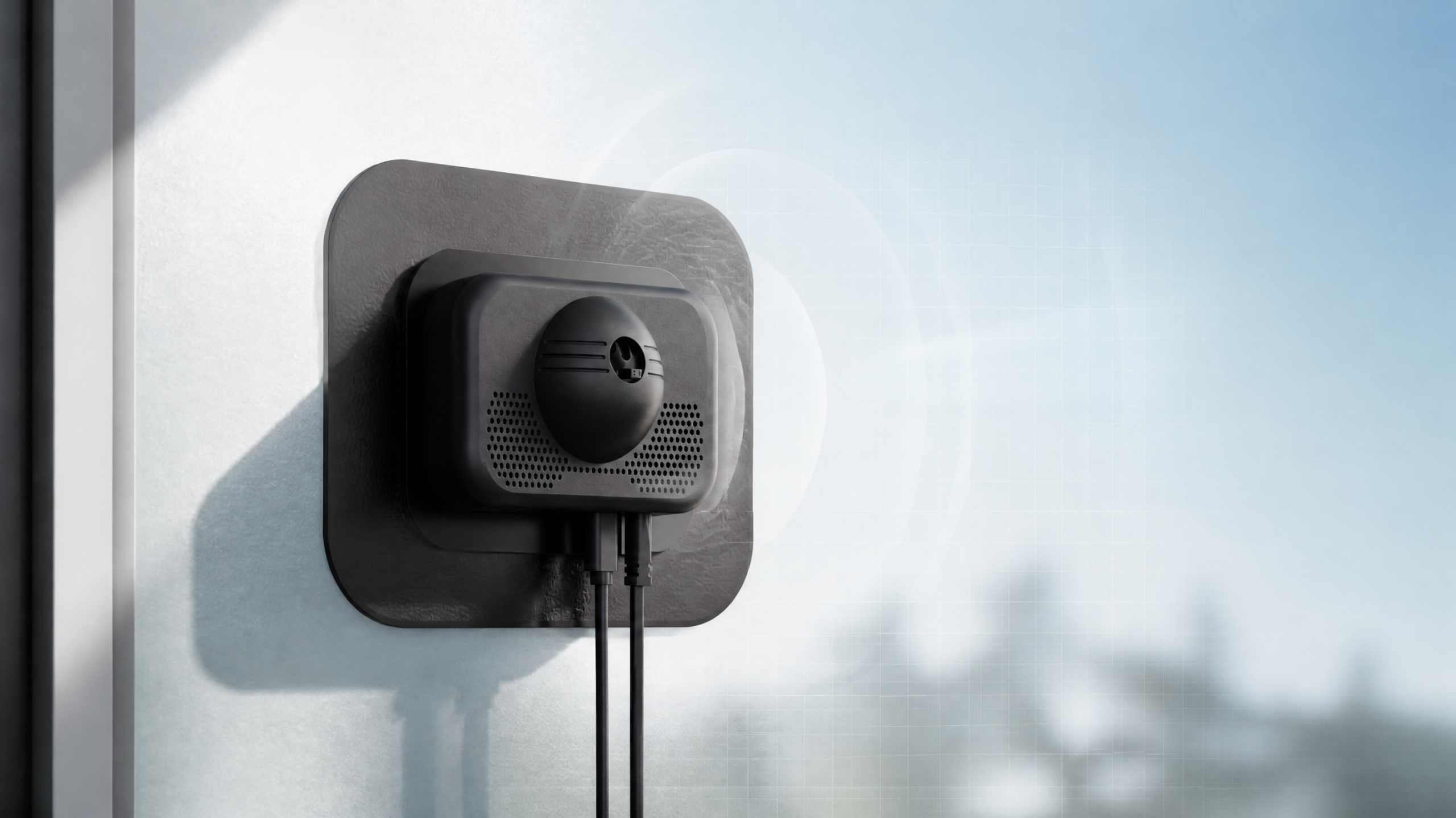
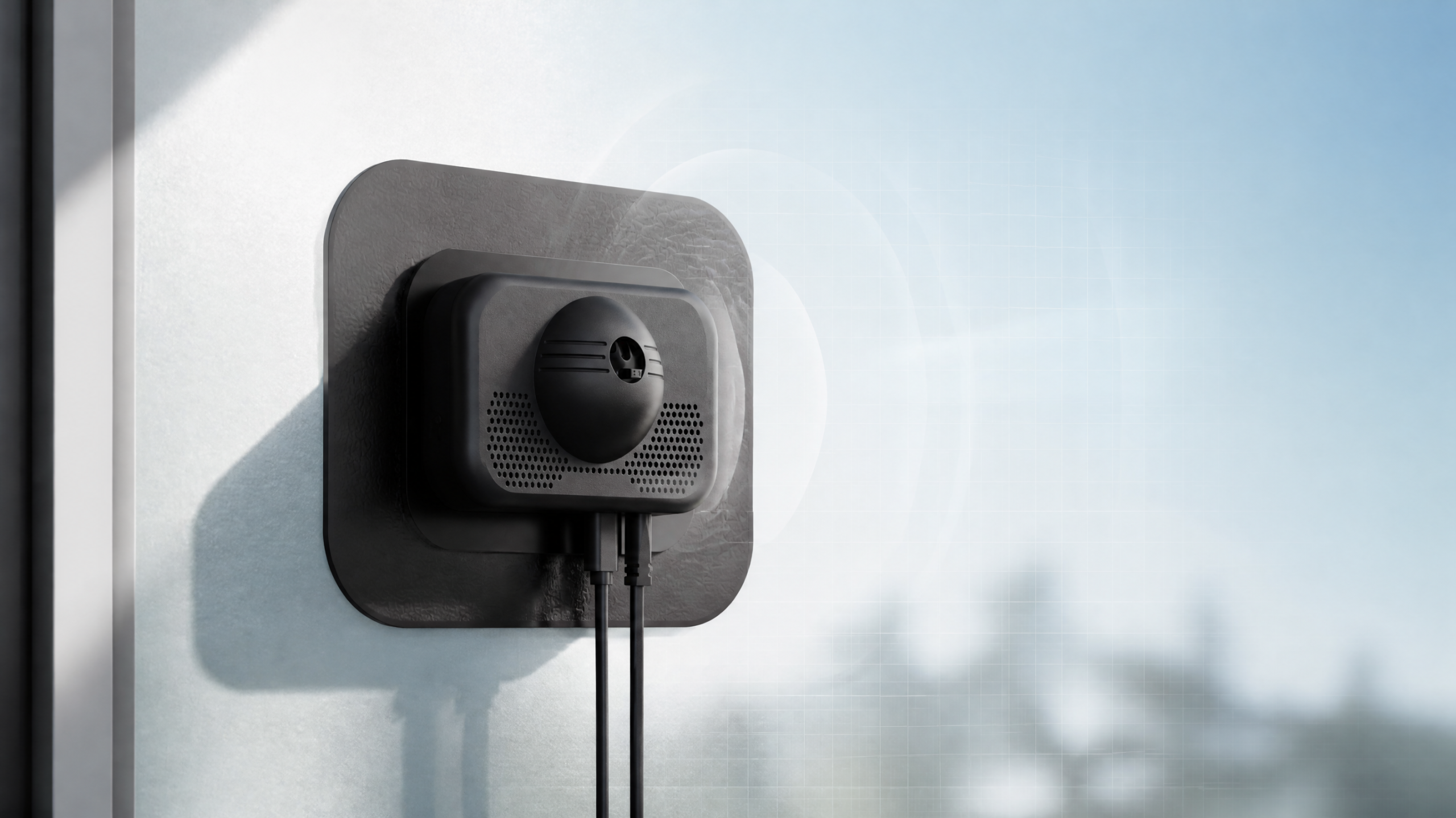
Now that you understand the powerful capabilities of Wi-Fi HaLow, imagine those benefits applied to your home security. This is exactly what the ShowMo MileFlask delivers. The ShowMo MileFlask is a groundbreaking sub 1ghz wifi security camera designed from the ground up to leverage the full potential of Wi-Fi HaLow technology.
With its impressive 1-mile wireless range, the MileFlask transcends the limitations of conventional security cameras. Whether you need to monitor a distant gate, a remote barn, the far end of a large property, or even a second building without running extensive cables, the MileFlask provides reliable connectivity where standard Wi-Fi simply can’t reach. Its ability to penetrate obstacles means fewer dead zones and a more comprehensive view of your surroundings.
Beyond its unparalleled range, the ShowMo MileFlask is built for practical, cost-effective security. Enjoy no monthly fees for local storage options, putting you in control of your data and your budget. Its robust outdoor design ensures durability in various weather conditions, making it an ideal solution for comprehensive remote monitoring. Experience truly expansive and dependable outdoor surveillance.
FAQs About Wi-Fi HaLow and Sub-1 GHz Wi-Fi Security Cameras
Q1: Is Wi-Fi HaLow compatible with my existing Wi-Fi router?
No, Wi-Fi HaLow devices require a Wi-Fi HaLow enabled access point or a dedicated HaLow gateway. They operate on different frequency bands and use different protocols than standard 2.4 GHz or 5 GHz Wi-Fi, similar to how a Bluetooth device needs a Bluetooth radio. Devices like the ShowMo MileFlask come with their own Wi-Fi HaLow bridge or hub to establish this connection.
Q2: What kind of data speeds can I expect with a sub 1ghz wifi security camera?
While not as fast as traditional Wi-Fi for bulk downloads, Wi-Fi HaLow offers sufficient bandwidth for high-definition video streaming from security cameras. Data rates typically range from a few hundred kilobits per second to tens of megabits per second, which is more than adequate for transmitting clear video feeds, motion alerts, and other security data efficiently over long distances.
Q3: Are there any interference issues with Wi-Fi HaLow given its long range?
Wi-Fi HaLow is designed to operate in relatively uncongested sub-1 GHz bands, which are typically less crowded than the 2.4 GHz band. Additionally, HaLow incorporates features like orthogonal frequency-division multiplexing (OFDM) and robust error correction to mitigate interference and maintain reliable connections, even in environments with some noise. Its narrower channels also contribute to better signal isolation.
Conclusion: The Future of Long-Range Home Security is Here
Understanding how Wi-Fi HaLow works reveals a technology perfectly tailored for the demands of modern home security. Its unparalleled range, impressive penetration capabilities, and energy efficiency address the critical limitations of traditional wireless solutions, especially for outdoor and large-area monitoring.
For anyone seeking to extend their security perimeter beyond the reach of standard Wi-Fi, the advent of 802.11ah explained here clearly demonstrates that HaLow is a game-changer. Products like the ShowMo MileFlask exemplify how this cutting-edge technology can deliver reliable, long-range surveillance without compromise, offering peace of mind across your entire property. Embrace the future of connected security with Wi-Fi HaLow.
“`