
4K Security Camera vs 1080p: Do You Really Need 4K for Your Home Security?
When it comes to safeguarding your home, choosing the right security camera resolution is a critical decision. You’ve likely encountered terms like “1080p” and “4K,” but understanding what these mean for your security footage and whether the higher resolution is truly a necessity can be daunting. In the ever-evolving world of home security, pinpointing the best resolution security camera 2026 and beyond requires a look at current technologies and future needs. This article dives deep into the 4K security camera vs 1080p debate, helping you determine if a 4K camera is worth the investment for your peace of mind.
For home security, clarity isn’t just a luxury; it’s a necessity. The ability to identify faces, read license plates, and discern crucial details can be the difference between a successful investigation and a frustrating dead end. So, let’s break down the technical differences and practical implications of 1080p and 4K resolutions.
Understanding Resolution: Pixels Make the Picture
Before we compare, let’s establish what resolution means. Resolution refers to the number of individual pixels that make up an image or video frame. More pixels generally mean more detail and a clearer picture.
- 1080p (Full HD): Also known as Full High Definition, 1080p cameras capture video at 1920 pixels horizontally by 1080 pixels vertically. This amounts to just over 2 million pixels per frame. For many years, 1080p has been the industry standard for high-quality video, offering a significant improvement over older analog systems.
- 4K (Ultra HD): Also known as Ultra High Definition (UHD), 4K cameras capture video at approximately 3840 pixels horizontally by 2160 pixels vertically. This translates to roughly 8 million pixels per frame – four times the pixel count of 1080p. This massive increase in pixel density is where 4K truly shines.
The Advantages of 4K Security Cameras: Is 4K Worth It for Security?
So, with four times the pixels, what benefits does 4K bring to the table for home security, and is 4K worth it security camera upgrades?
1. Unparalleled Detail and Clarity
The most significant advantage of 4K is its ability to capture intricate details. Imagine trying to identify a suspicious individual or a car at a distance. With 4K, you’re much more likely to:
- Clearly distinguish facial features, even from a distance.
- Read license plates on vehicles that might be further away or moving.
- Identify specific items being carried or dropped by an intruder.
- Zoom in digitally on recorded footage without significant pixelation, preserving critical evidence for law enforcement. This “digital pan and zoom” capability is vastly superior with 4K.
For large properties, expansive driveways, or areas where coverage needs to be broad yet detailed, 4K offers a distinct advantage.
2. Wider Coverage with Less Cameras
Because 4K cameras capture so much more detail, a single 4K camera can often cover the same area that might otherwise require two or more 1080p cameras. This can lead to a simpler installation, fewer network connections, and potentially lower overall equipment costs in some scenarios.
3. Enhanced Digital Zoom Capabilities
With 1080p footage, zooming in digitally quickly degrades the image quality, making details blurry and pixelated. 4K, with its abundance of pixels, allows for significant digital zooming without losing crucial clarity. This is incredibly valuable when reviewing footage to pinpoint specific events or identify individuals after the fact.
| Feature | 1080p (Full HD) | 4K (Ultra HD) |
|---|---|---|
| Resolution (Pixels) | 1920 x 1080 (approx. 2.1 MP) | 3840 x 2160 (approx. 8.3 MP) |
| Detail Level | Good for close-range identification | Excellent for long-range and intricate detail |
| Digital Zoom | Limited, quickly pixelated | Extensive, maintains clarity |
| Storage Requirements | Moderate | High (4x more than 1080p) |
| Bandwidth Usage | Moderate | High |
| Cost (Camera) | Generally lower | Generally higher |
| Ideal Scenarios | Small areas, doorbells, budget-conscious setups | Large properties, critical identification, future-proofing |
The Practical Considerations of Choosing 4K
While the benefits are clear, 4K isn’t without its challenges. Understanding these will help you make an informed decision:
1. Storage Requirements
More pixels mean larger video files. A 4K camera will generate significantly more data than a 1080p camera. This impacts:
- NVR/DVR Storage: You’ll need hard drives with much larger capacities to store the same duration of footage.
- Cloud Storage: Cloud plans might be more expensive or fill up faster, requiring you to upgrade your subscription.
2. Bandwidth Consumption
Live streaming and uploading 4K video consumes considerably more internet bandwidth. This can be a concern if:
- You have a limited internet data plan.
- Your internet speed is slow, leading to buffering or sluggish remote viewing.
- You have multiple 4K cameras, which can collectively hog your network.
Ensure your home network is robust enough to handle the increased data flow.
3. Cost
Generally, 4K security cameras are more expensive than their 1080p counterparts. This price difference extends to supporting equipment like higher-capacity NVRs (Network Video Recorders) or faster network infrastructure.
When 1080p Might Be Enough
Despite the allure of 4K, 1080p is still a perfectly viable and often excellent choice for many homeowners. If your primary concerns are:
- Budget: 1080p systems are more affordable upfront.
- Smaller Areas: For monitoring a single doorway, a small backyard, or an indoor space, 1080p provides sufficient detail for identification up close.
- Limited Bandwidth/Storage: If your internet is slower or you wish to minimize storage costs, 1080p is a more forgiving option.
- General Deterrence: Sometimes, the mere presence of a visible camera is enough to deter casual intruders.
Even with 1080p, you can achieve excellent security, especially with cameras that have good low-light performance and wide viewing angles.
Product Spotlight: ShowMo WinEye – 4K Night Vision without the Hassle
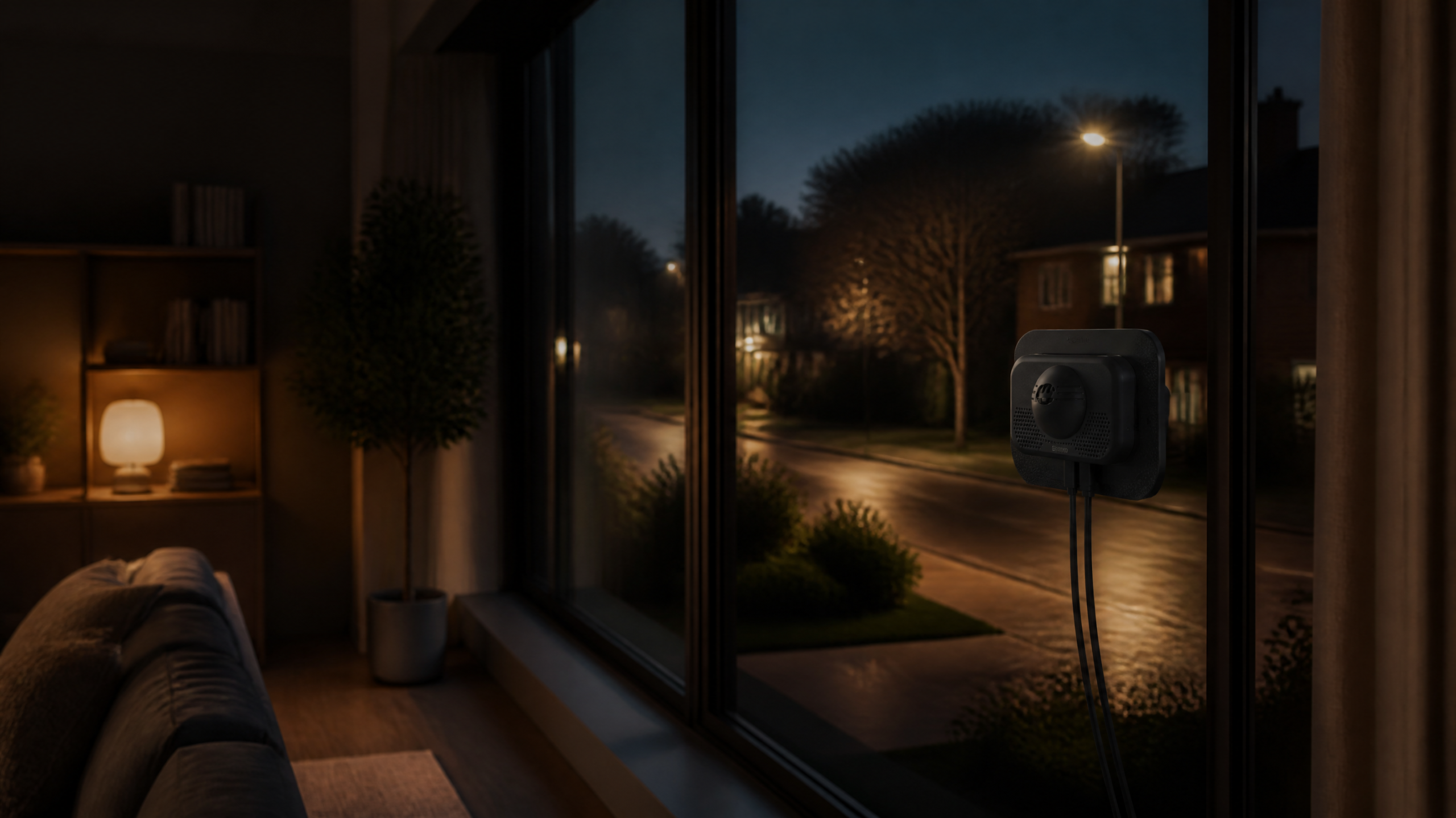
If the superior detail of 4K is appealing, particularly for capturing events in low-light conditions, but you’re concerned about complicated installations, the ShowMo WinEye offers a compelling solution. This innovative window-mounted security camera provides outdoor surveillance from the safety and convenience of indoors, eliminating the need for drilling or complex wiring.
The ShowMo WinEye stands out with its powerful 4K night vision capabilities, allowing it to capture incredibly clear and detailed footage even in complete darkness, right through your window. This feature is particularly crucial for security, as many incidents occur under the cover of night. With ShowMo WinEye, you get the unparalleled clarity of 4K without compromising on ease of installation or the aesthetics of your home’s exterior. It’s an ideal choice for renters, apartment dwellers, or anyone seeking a high-resolution, no-fuss security solution with exceptional night performance.
Conclusion: Finding Your Best Resolution Security Camera in 2026 and Beyond
So, do you really need 4K? The answer largely depends on your specific security needs, property size, budget, and internet infrastructure. If detailed identification at a distance, wide coverage with fewer cameras, and superior digital zoom capabilities are paramount, then a 4K security camera is undoubtedly a worthwhile investment for the best resolution security camera 2026 and the future.
However, if your monitoring is for smaller areas, budget is a primary concern, or your internet isn’t top-tier, a 1080p system can still provide robust and effective home security. When making your decision, consider not just the resolution, but also other features like night vision capabilities, field of view, smart detection features, and ease of installation – aspects where products like the ShowMo WinEye excel by combining high resolution with user-friendly design.
Ultimately, the goal is to feel secure. By understanding the pros and cons of both 1080p and 4K, you can choose the security camera system that best fits your requirements and provides the peace of mind you deserve.
Frequently Asked Questions (FAQ)
Q1: What are the main benefits of a 4K security camera over a 1080p camera?
The primary benefits of a 4K camera are significantly higher detail for better identification (faces, license plates), superior digital zoom without pixelation, and the ability to cover larger areas with fewer cameras compared to 1080p. This clarity is crucial for evidence collection.
Q2: Will a 4K security camera use more internet data?
Yes, 4K security cameras consume substantially more internet bandwidth than 1080p cameras, both for live streaming and uploading recorded footage. This is due to the much larger file sizes associated with 4K video. If you have a limited data plan or slower internet speeds, this is an important factor to consider.
Q3: Is 4K night vision truly better than 1080p night vision?
Absolutely. While both resolutions can offer night vision, 4K night vision retains more detail due to its higher pixel count. This means that in low-light or no-light conditions, a 4K camera with good night vision (like the ShowMo WinEye) can capture much sharper images, making it easier to identify individuals, vehicles, or critical events that happen after dark.